Gundam are Way Cooler Than Transformers
With the new Transformers movie opening today, I feel the need to let all the kids know that Gundam are way cooler than Transformers. There’s one simple reason for this: Gundam are real. They’re not just toys or computer generated images – here are the pictures to prove it
.
These are photos of the recently completed Gundam statue, measuring 60 feet tall and weighing 35 tons. It’s in Odaiba, one of my favorite places in Tokyo. When we were living in Tokyo, Kai was crazy for Gundam, along with at least half of Japan’s male population. We spent many evenings building and gluing model Gundam sets, and we filled a suitcase with them for our trip home. Japanese toy stores – as well as electronics stores like Yodabashi Camera – typically have multiple aisles dedicated to Gundam merchandise.
Many toys and anime from Japan have been successful in the US. It surprises me that the massive, decades-long popularity of Gundam in Japan has not spilled over to the US at all.
The photos above are from this Pink Tentacle post. They also have pictures from last month, partway through its construction.
The Institute for Nature Study in Tokyo
The grounds at the Institute for Nature Study, near Meguro station in Tokyo, are unlike any other koen (park) or gyoen (garden) in the city. “It occupies a 200,000 square meter area with various original habitats of the Tokyo area, such as forest, marsh and ponds.”
The area around Meguro station is uneventful, but it’s worth the trip to visit the Institute’s grounds. Take even just a short walk from the entrance, and you’ll be immersed in a natural environment, with beautiful trees, marshes, turtles, and a variety of birds and other creatures. There’s one area with a large information board about the various birds and their songs, but unfortunately, they’re generally drowned out by the crows. Crows have been a major problem in Japan in recent years:
Blackouts are just one of the problems caused by an explosion in Japan’s population of crows, which have grown so numerous that they seem to compete with humans for space in this crowded nation [they often nest on electric poles]. Communities are scrambling to find ways to relocate or reduce their crow populations, as ever larger flocks of loud, ominous birds have taken over parks and nature reserves, frightening away residents.
It is a scourge straight out of Hitchcock, and the crows here look and act the part. With wing spans up to a yard and intimidating black beaks and sharp claws, Japan’s crows are bigger, more aggressive and downright scarier than those usually seen in North America.
Aside from the occasional crow calls, it’s a wonderfully peaceful place. The boys enjoyed it simply because it’s Nature: it’s a living, breathing, sometimes messy place, with various critters scurrying around. This makes it quite different from a place like the perfectly manicured Shinjuku Gyoen.
Visit the English page on the official site for location, hours, etc.
A Clash of Buildings in Tokyo
This picture shows the only run down shack I ever saw anywhere in Tokyo. It was a few blocks from our apartment, roughly halfway between the Shinagawa and Tamachi stations on the Yamanote Line. It’s most likely owned by some old-timer who refused to sell at any price. I imagine that over the years, he (or she) has watched all the concrete, steel, and glass buildings spring up around him.
It reminded me of a news story from just a few weeks before I took the picture. A man in Tokyo took several rifle shots at a new apartment building that was blocking the sunlight from reaching his house (no one was hurt).
Kai’s 1st Grade Experience in Tokyo
While we were living in Tokyo I wrote a number of posts about all the fun Kai was having in the Japanese public school kindergarten. I never had a chance to write about the time he spent in 1st grade. Kids in Japan go to school year-round, and their school year starts in April, with only a 2 week break after finishing the previous grade.
The week before Kai started 1st grade, we got a notice in the mail from the school, inviting us to attend a seminar for parents on their children’s safety while going back and forth from home to school (a scan of the notice is above). This was the exact opposite of what such a seminar would cover in the US: they tell the parents that while it was fine for you to walk your children to school in kindergarten, you have to let them walk to school on their own in 1st grade. They patiently explain that your kids are growing up, and its time to let them start feeling independent (Tokyo is densely populated and every neighborhood has its own elementary school, so no one rides a bus). They emphasize that the streets are very safe and you will only embarrass your child if you’re seen taking him or her to school. For the walk home in the afternoon, the kids are organized into groups of about a dozen each, based on which kids live near each other, and they walk each other home. Kai’s school was only two blocks away from our apartment, so we got through it without too much anxiety
.
Walking home with their classmates is a part of Japanese kids’ socialization. The schools begin emphasizing the importance of social groups as soon as they leave kindergarten. At Kai’s kindergarten graduation, the local district superintendent gave a speech explaining to them it was time to start relying more on their friends and less on their parents.
After having a great time in kindergarten, Kai was very excited to start 1st grade. The first task for us was investing (and I do mean investing) in his randoseru:
A randoseru is a firm-sided backpack made of stitched firm leather… The randoseru is the most universal and recognizable feature of the Japanese school uniform and is considered symbolic of the virtues necessary to obtain a good education—unity, discipline, hard work and dedication. Traditionally, the randoseru is red in colour for girls, black for boys… Traditionally given to a child upon beginning their first year at school, the randoseru’s materials and workmanship are designed to allow the backpack to endure the child’s entire elementary education (six years)… The randoseru’s durability and significance is reflected in its cost: a new randoseru made of genuine leather can carry a pricetag of over 30,000 yen, almost 300 US dollars…
The ceremony marking the start of the school year was fun. The video clip on the right is the incoming 2nd grade class playing their pianicas. I was impressed at how well they played – they’re only 7 years old. Kai still has his pianica, and he and Eidan occasionally fool around with it.
Unfortunately, Kai’s excitement turned to misery after just a few days in 1st grade. American elementary schools gradually increase the academic rigor from grade to grade. In Japan, everything is fun and games through kindergarten, and then they bring the hammer down in 1st grade. While kindergarten was mainly focused on fun arts and crafts, in 1st grade Kai was stuck behind a desk all day, listening to a teacher talk in a language he didn’t understand. It was an especially tough transition for him because, while he had two friends in kindergarten who spoke English, no one in his 1st grade class knew any English. The school was supposed to assign him a Japanese tutor, but for some reason they had trouble finding someone. The one bright spot for him was English class, which had an American teacher he liked, and it was the one place he felt like he knew what was going on.
His misery in 1st grade was one of the reasons I came back to the US with the boys about a month earlier than planned (the other reason was that Maria was going to be traveling a lot for her work). That meant Kai was able to re-join his old kindergarten class here for the last few weeks of the American school year. So he’s the proud owner of two kindergarten diplomas from two different countries.
Tokyo Station
Tokyo has over 450 subway and rail stations, so for one to bear the name “Tokyo Station,” it has to be something special. Tokyo station is one of the oldest in the city, and with over 3,000 trains passing through it every day, it’s the busiest rail station in the country (in terms of trains, not passengers – that distinction belongs to Shinjuku station, with an average of over 3.6 million passengers per day). It’s located near the Imperial Palace and the busy Ginza district.
When we were living in Tokyo, Maria’s office was a short walk from Tokyo station. The boys and I would occasionally meet her there for dinner, in one of the many restaurants in the endless, sprawling underground complex below the station, or in the Marunouchi Oazo shopping center across the street (home of Com Pho, which I wrote about a while back). JAXA (Japan’s space agency) maintains a small, free museum in Marunouchi Oazo. It was a favorite hangout for the boys and I whenever we had to wait for Maria.
Tokyo station’s western facade, pictured above, is one of just a precious few significant pre-war structures still standing in Tokyo:
Tokyo Station opened on December 18, 1914… In 1921, Prime Minister Hara Takashi was assassinated at the south gates… Much of the station was destroyed in two B-29 firebombings on May 25 and June 25, 1945. These bombings shattered the impressive glass domes. The station was quickly rebuilt within the year, but simple angular roofs were built in place of the domes, and the restored building was only two stories tall instead of three… The main station facade on the western side of the station is brick-built, surviving from the time when the station opened… It is the main intercity rail terminal in Tokyo, the busiest station in Japan in terms of number of trains per day (over 3,000), and the eighth-busiest in Japan in terms of passenger throughput…The whole complex is linked by an extensive system of underground passageways which merge with surrounding commercial buildings and shopping centres.
One Day in Tokyo: Asakusa, and a River Cruise to Odaiba
This post includes pictures from each of my 3 visits to Japan, in 1999, 2004, and 2007.
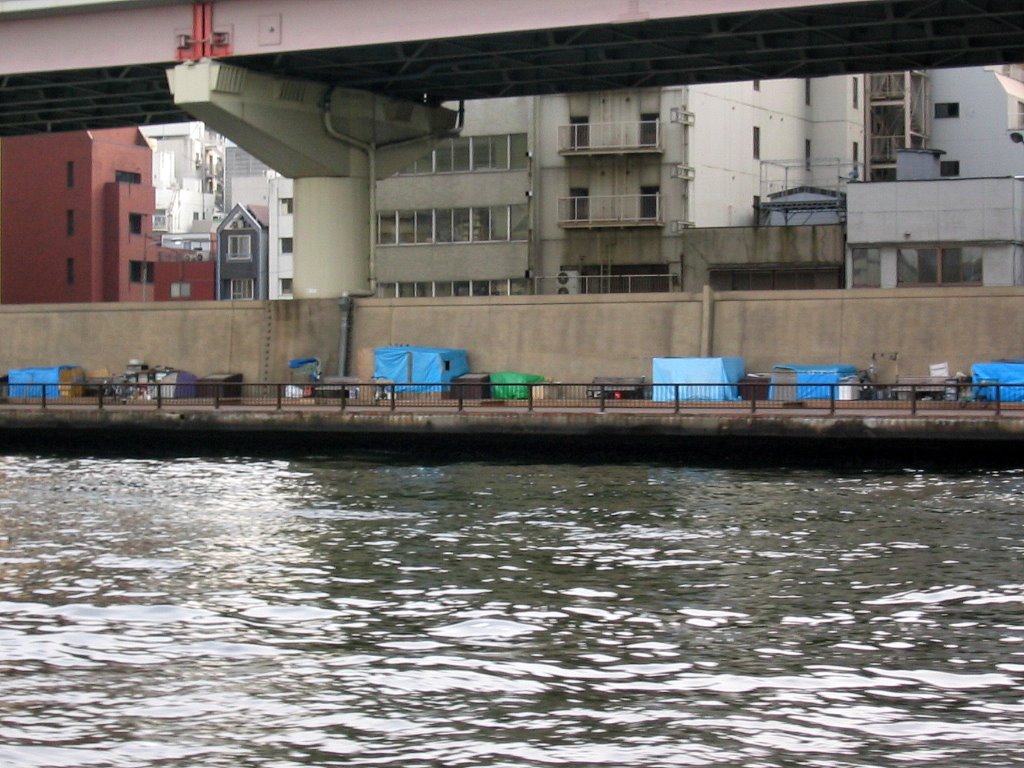
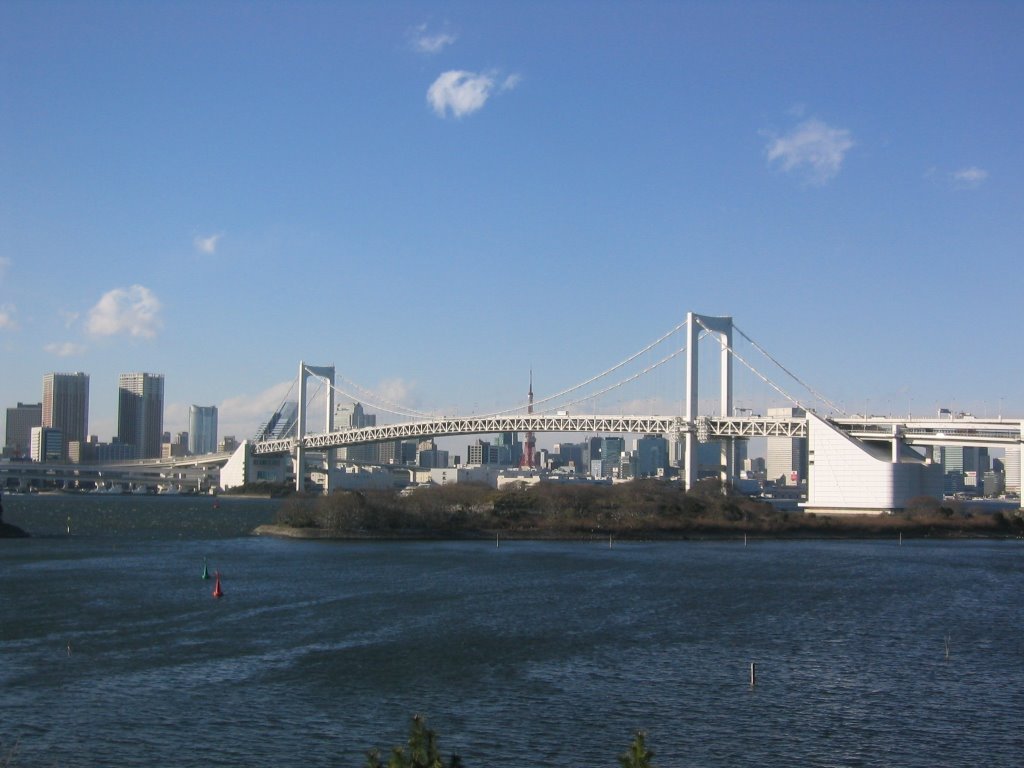
If you have the misfortune of visiting Tokyo for only a few days, you’ll find it hard to decide where to spend your time in a city that has so many amazing things to see and do. A good way to get a sense of the traditional, slower-paced Tokyo, as well as the modern, fast-paced Tokyo in a single day is to venture to the northeastern district of Asakusa in the morning, with its temples and buildings dating back to the 1950s (Tokyo was essentially leveled in the WWII fire-bombings, so the 50s is considered old for Tokyo architecture). Then take a cruise south on the Sumida river, which will take you under about a dozen architecturally distinct bridges. The cruise ends on the man-made island of Odaiba in Tokyo Bay, which offers endless attractions for modern shopping and hi-tech fun, and even a sandy beach. At the end of the day (or night), head back to the mainland on the Yurikamone line, which does an entirely gratuitous 360° loop as it crosses the river, giving you a panoramic view of eastern Tokyo.
Asakusa
Asakusa is a well known part of Tokyo, and many others have written about it, so I’ll just give you a summary from Wikipedia:
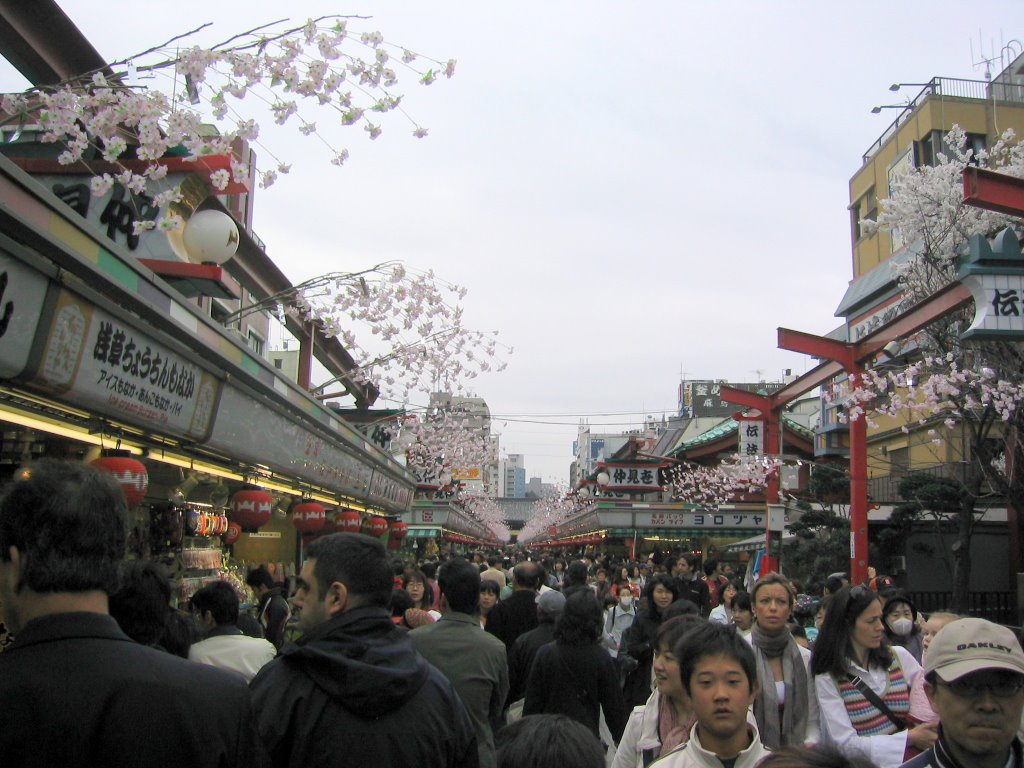
Asakusa is… most famous for the Sensō-ji, a Buddhist temple dedicated to the bodhisattva Kannon. There are several more temples in Asakusa, as well as various festivals… For most of the twentieth century, Asakusa was the major entertainment district in Tokyo… In its role as a pleasure district, it has now been surpassed by Shinjuku and other colorful areas of the city… It is central to the area colloquially referred to as Shitamachi (not an official designation), which literally means “low city,” referring to the low elevation of this old part of Tokyo, on the banks of the Sumida River. As the name suggests, the area has a less frenetic and more traditionally Japanese atmosphere than some other neighborhoods of Tokyo… In keeping with a peculiarly Tokyo tradition, Asakusa hosts a major cluster of domestic kitchenware stores on Kappabashi-dori, which is visited by many Tokyoites for essential supplies. Next to the Sensō-ji temple grounds is a small carnival complex with rides, booths, and games, called Hanayashiki. The neighborhood theaters specialize in showing classic Japanese films, as many of the tourists are elderly Japanese.
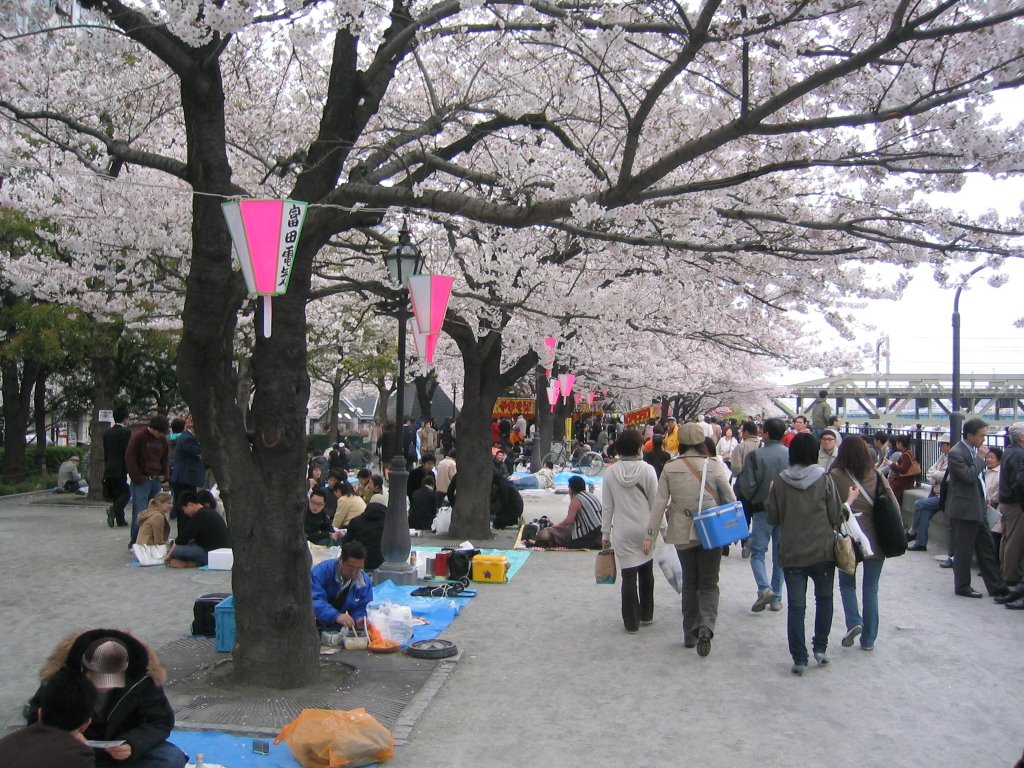
Asakusa is a part of Tokyo whose glory days are behind it, but still has a lot of old city charm, and continues to draw tourists as well as Tokyoites looking to spend some time away from the fast-paced modernity that defines most of Tokyo. If you visit during cherry blossom season, the park along the river will be packed with people having picnics to celebrate the start of Spring.
Sumida River Cruise
The river cruise boats depart from the Asakusa wharf. Don’t be shy about asking someone where it is. Plenty of people speak English, and if you’re not too far from it, someone may even walk you right to it. There are multiple destinations so make sure you’re getting on a boat headed to Odaiba! The cruise lasts about an hour, and takes you along the eastern side of Tokyo, so you’ll see a lot of interesting buildings and bridges. About.com has a helpful guide.
Odaiba
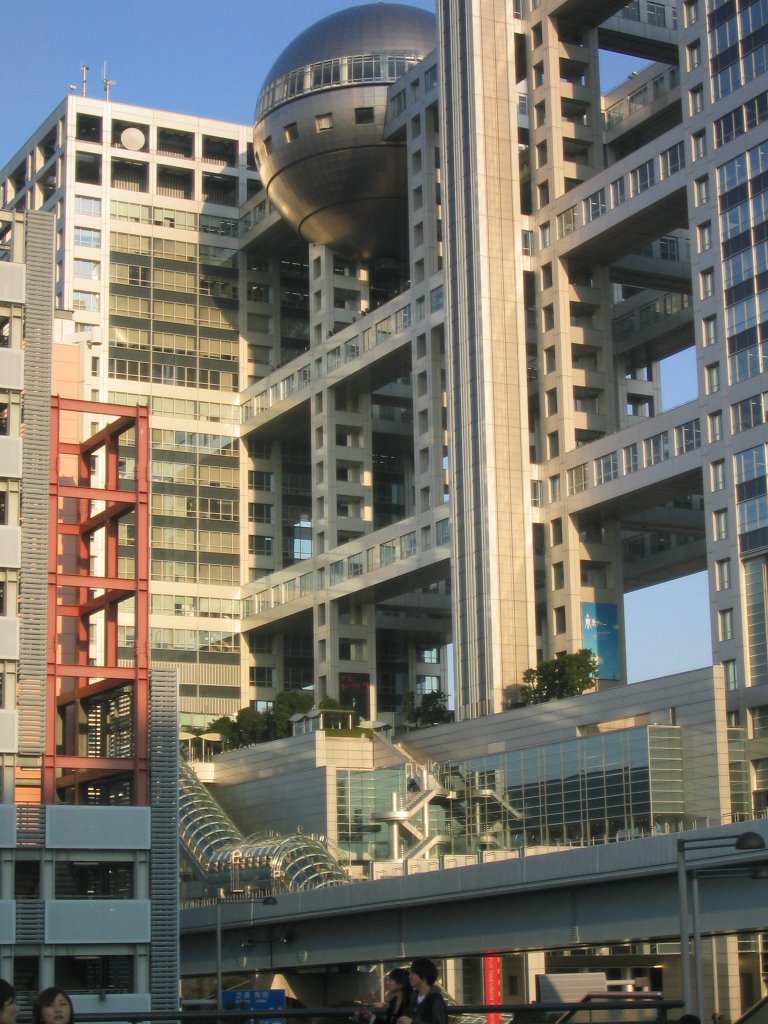
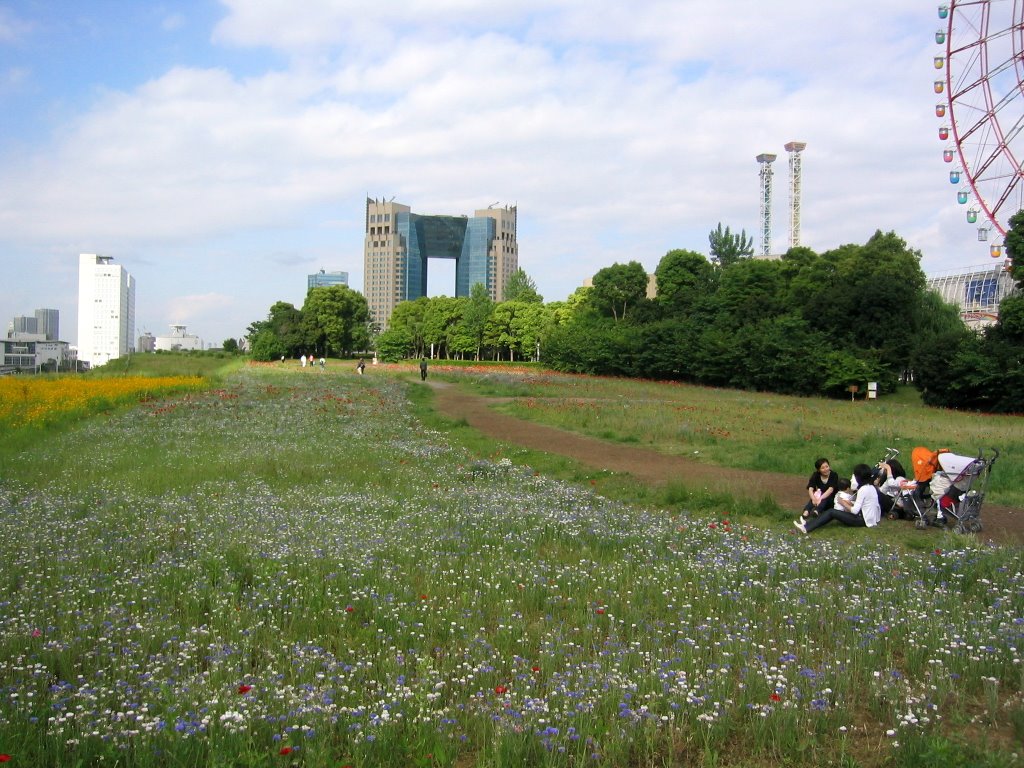
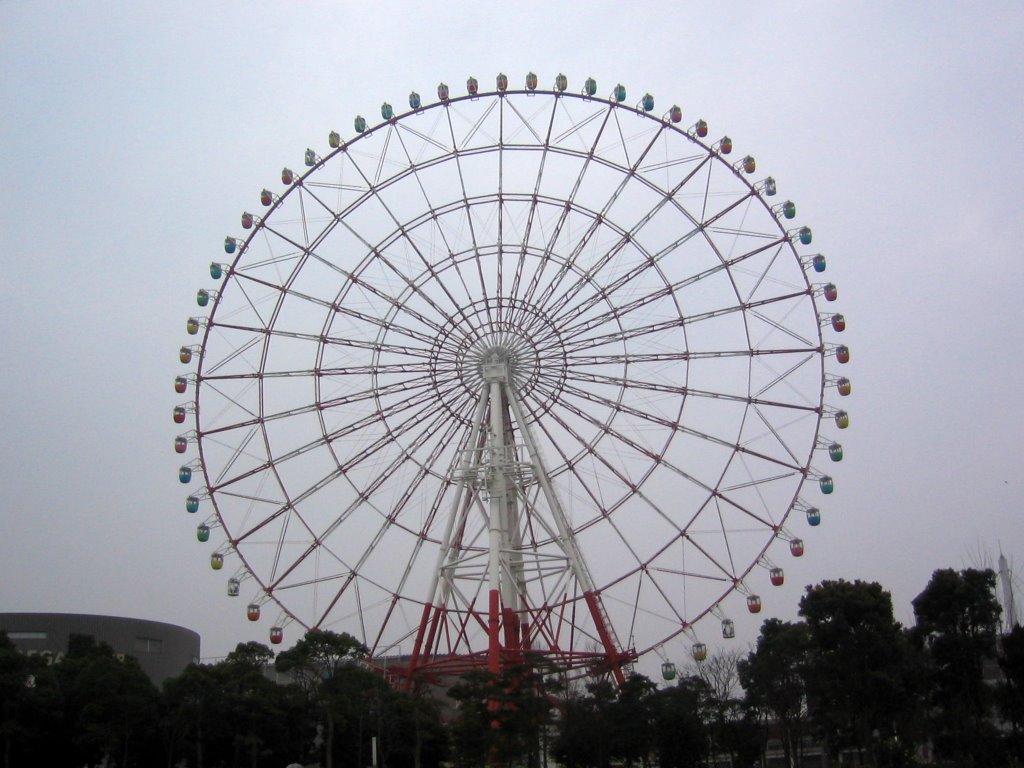
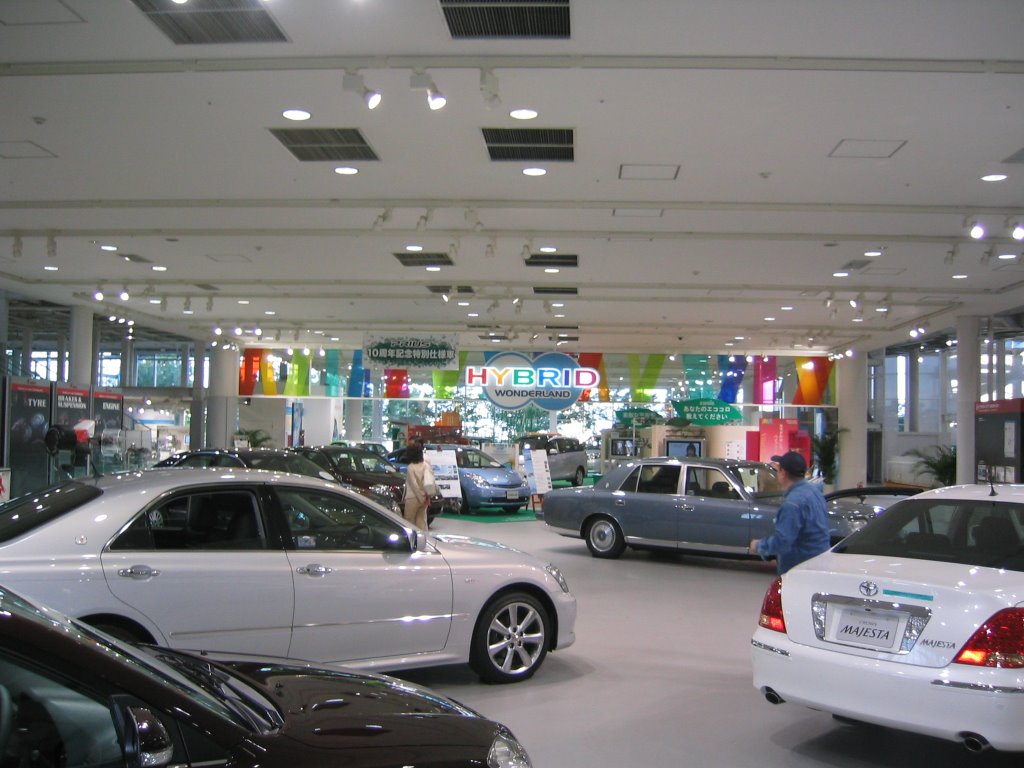
Odaiba is a cross between Disney World and Las Vegas: it has all the lights and dazzle of both, but is more family-friendly than Vegas, and has a lot more fun activities for adults than Disney World. Japan-guide.com has a good overview of Odaiba’s multitude of attractions. It was a frequent destination for the boys and I. From where we lived in Shinagawa, Odaiba was only one stop away on the Rinkai Line. The boys especially loved the Toyota MegaWeb complex, the Palette Town video arcade, and the parks and beaches.
The Yurikamone Line is an attraction itself, and is definitely the way you should depart Odaiba. It’s fully automated – there is no one driving the train – and the tracks run in a loop on the eastern edge of the river, giving you a spectacular view of the city.
I’ve visited Odaiba about 20 times, and I still haven’t seen all of it (although that’s partly because the boys always wanted to do the same things every time we went). I’m recommending it for just a half day visit though, because it really will give you sensory overload. It’s worth a second half-day visit if you have time.
Return to LaLaport
As part of my current effort to finally finish blogging about our time living in Japan two years ago, I just added several cool pictures to my post about the dazzling LaLaport mall in Tokyo - take a look. (I’m not re-publishing it with a new date like I did with my last post, because I wrote it right after we visited there, so I shouldn’t change the date on it.)
The Park at World City Towers
This is a re-publication of an old post. I added a bunch of pictures and some more information. Original publication date: 8/14/2007.
The pictures above are from the park adjacent to the gargantuan World City Towers residential complex in Minato. It’s Tokyo’s largest, with 2,090 residential units. Click the bottom right picture for a video of Eidan – from Kai he learned the trick of pretending to bump into a pole and exclaiming “unh!,” as if he’d hurt himself. And here he’s doing it repeatedly. This park was a short walk from our apartment, and during the spring it was a daily destination for Eidan and I in the mornings. We’d play in the park after Maria left for work and Kai left for school, then I’d do our daily shopping at the wonderful Maruetsu grocery store. We’d go home for lunch, Eidan would nap for two hours while I worked, Kai would finish school, the three of us would go somewhere for a few hours, and then be home in time for dinner with Maria.
I enjoy doing write-ups of the parks we visited in Tokyo, but this one isn’t worth much commentary – it’s main attraction was that it was nearby. It’s a new park, and is quite large, but with only a few play structures, and an enormous, smooth gravel area in the middle. The Tokyo Monorail line runs along the edge of it. Eidan always enjoyed when the Pokemon train occasionally came by. Every morning a workman came by to empty the trashcans, and to sweep the entire gravel area with nothing more than an old fashioned Japanese broom. The one astonishing thing is that the grassy area of the park is strewn with rubble. It’s peppered with small pieces of broken concrete and tile, from the recently completed World City Towers. It’s just another idiosyncrasy of the otherwise fastidious Japanese: in so many ways they have the most exacting standards, but when it comes to parks, they’ll just throw grass seed down on top of the rubble and call it a day.
The two pictures below are from a smaller park that was across the street from our apartment in Minato. We didn’t go there much because it only had one small play structure and it tended to get very dusty (the ground around the play structure was just packed dirt, which would blow around when the weather was dry). But it was fun to see the kids from the local daycare literally get carted out for playtime.
Japanese Police Boxes (Koban – 交番)
Police boxes (Koban – 交番) – are ubiquitous in Tokyo – every neighborhood has one:
In direct contact with the people… are the kobans (police boxes in urbanized areas) and chuzaishos (police boxes in rural areas)… There are approximately 6,600 kobans and 9,000 chuzaishos in Japan… A chuzaisho’s jurisdiction may encompass up to 18 square miles and service 3,000 people. A koban typically services 0.22 square miles with a population of 8,500… Unlike the U.S. which centers police activity around the patrol car, Japanese police activity centers around the koban. In Tokyo, the official minimum complement for each koban is 12 officers… Much like their patrol car driving American counterparts, these officers patrol the neighborhood (however they do so on foot or bicycle), respond to calls of distress, and assist detectives or national agents in whatever project they may have.
There are a couple things that make the kobans so distinctive. One is their architecture. Most are small, ordinary-looking buildings, but some have a great deal of flair, as you can see in my pictures. The Japan Visitor blog has some more pictures, as well as a history of kobans.
The other distinctive quality is the community policing aspect of kobans:
Japanese neighborhoods look upon their koban officers as a just and kind “big brother”. Often, koban officers are asked to arbitrate disputes that would end up as court cases here in the U.S. Throughout the day, citizens will stop into the koban to relate their experiences or seek advice about this or that. While on patrol, koban officers engage in casual conversation with anyone who happens to be around. By establishing this friendly atmosphere, the koban officers ease concerns that the populace may have and establish an environment where citizens are more willing to assist in criminal investigations. This attitude is distinctly different from the U.S. where it is considered disgraceful to “snitch” on another person and the police appear as an authoritative force which only presents itself when there is trouble.
When I was in Ueno Park one day with the boys, and they were arguing over who’s turn it was to play with a toy, a police officer intervened. As an American, my first thought at seeing a police officer coming right towards us was that we were in trouble for, well…, something. But instead he came to resolve the dispute by giving them each a piece of candy and a pat on the head.
Since crime rates in Japan are so low, and violent crime is rare, the police do not carry guns. Aside from their neighborhood foot patrols, the primary daily activity of the police in kobans is to give directions. This is actually a non-trivial function, as it’s sometimes impossible to find addresses in major Japanese cities. Most streets don’t have names, and building numbers are assigned based partly on location, and partly on when the building was constructed, resulting in an addressing system that is often just as mystifying to the Japanese as it is to foreigners.
Kobans were in the news last week in Japan, as they now allow female officers to work the night shift. When we lived in Tokyo, we occasionally saw female officers during the day, but never at night.
Update: the page I linked above for my quotes just disappeared from the web. At least for now, it’s still accessible in the Google cache.
The Elevated Park at the Shibuara Water Reclamation Center
I’ve been going through my pictures from our time living in Japan two years ago, and I realized there’s a lot of good stuff I never had a chance to blog about. Time permitting, I’ll have some more posts coming up about our time in Japan.
When we lived in Shinagawa, we were just a few blocks away from the Shibaura Water Reclamation Center (click to see a great aerial shot, featuring their cartoon mascot; yes, even public works facilities in Japan get cartoon mascots). Less euphemistically, it’s a sewage treatment plant. Luckily, because of the prevailing winds, we rarely smelled it (the neighborhood just north of us – near the Tamachi station – typically got the worst of its fragrances). We walked by it almost every day, and something we never noticed during our first few months living there is that it’s home to a good-sized park. The reason we didn’t notice is because the park is entirely above ground. From the street level, we saw a ramp that we just assumed went to an elevated parking area. But it’s actually a park with plenty of green grass and trees, supported by a a whole lot of concrete pillars.
It’s a truly remarkable use of an urban space that otherwise certainly would not be visited by anyone other than the plant’s employees. It has large green spaces for picnics and throwing frisbees, tennis courts, a rose garden, and several play structures and swing sets for the kids. Once we finally discovered it, Eidan and I went there several times. After you enter the park, there is no indication you’re on top of an enormous sewage treatment facility, at least as long as the winds are favorable. All along the edge of the park are tall, densely packed shrubs, hiding the vast swath of blue treatment tanks that lie beyond (to take the picture of them you see above, I had to push myself behind the shrubs and position my camera carefully through the chain link fence).
One time I went around to the main business entrance for the plant, with Eidan on the stroller. There was a small, attractive picnic area with a small koi pond right inside the open gate, so we strolled in. From there I could see an entrance to the facility itself, with several informative signs visible just beyond it, so I figured I could go in for a self-guided tour. I did, and learned a lot about sewage treatment as I stopped by each big piece of equipment doing its thing, and read its sign (all the signs were written in Japanese and English). But halfway through I ended up at the rear entrance, which was locked and had guards posted. It dawned on me at that point that I probably shouldn’t be there, so I quietly made my way back out to the main entrance with Eidan.
Directions: unless you have a real thing for neighborhood parks or sewage treatment plants it’s not really worth a special trip, but if you’re already near the Shinagawa station and you want to check it out, see the directions at the very bottom of Shibaura Water Reclamation Center web page. Or just look for Shinagawa’s most recognizable building – the NTT DoCoMo building. Coming from the Shinagawa station, the park is just past the building.